Coast Redwoods in Muir Woods
Muir Woods and redwoods: the names
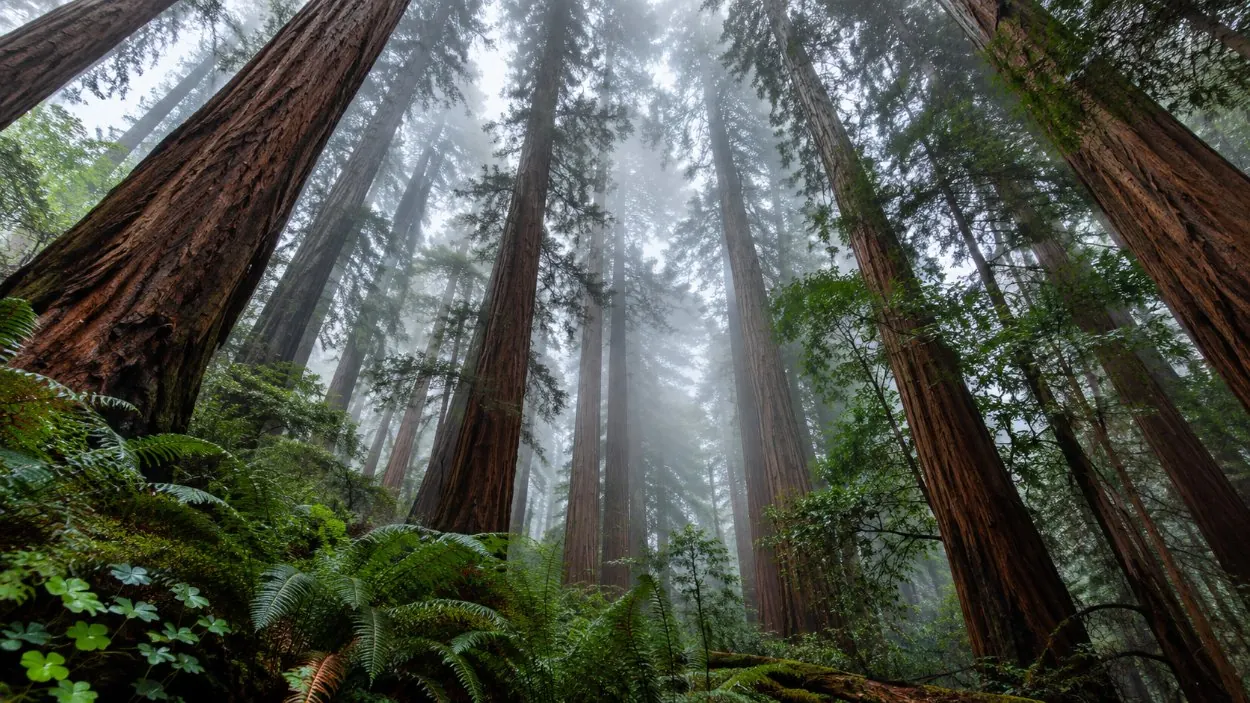
Muir Woods is a place, not a species. It is a 554-acre national monument in Marin County that protects one of the last old-growth coast redwood forests in the Bay Area, along Redwood Creek at the foot of Mount Tamalpais. “Redwood” is the tree. The forest is named after the naturalist John Muir, at the insistence of William Kent, who donated the land with his wife Elizabeth Thacher Kent; the history page covers that part.
Three trees called redwood
| Tree | Scientific name | Where it grows |
|---|---|---|
| Coast redwood | Sequoia sempervirens | The California coast, including Muir Woods |
| Giant sequoia | Sequoiadendron giganteum | The Sierra Nevada, for example Yosemite’s Mariposa Grove |
| Dawn redwood | A third species, deciduous | Native to China |
Coast redwoods and giant sequoias are often mixed up, and some visitors arrive at Muir Woods expecting the Sierra trees. The two grow in different mountains, and a trip to see giant sequoias is a separate trip to the Sierra Nevada.
Height
Coast redwoods are the tallest tree species in the world, but the tallest individual trees are not in Muir Woods. The tallest tree in the monument is about 258 feet. The tallest known redwoods grow about 300 miles to the north, in Redwood National and State Parks, on the far north coast. Figures for Muir Woods that go far above 258 feet do not match any tree there. The alternatives page lists the other redwood forests in the region.
Age
The oldest trees in Muir Woods are more than 1,100 years old. One tour listing gives “over 1,000 years”, which describes the same trees in rounder terms. These trees were never logged, which is what old growth means here: the canyon was bought to save it from logging and then given to the nation.
Fog
Coast redwoods draw moisture from the summer coastal fog, which comes in from the Pacific and settles over the ridges of Mount Tamalpais. That is why the forest stays cool and damp in the shade even in summer, and why fog in the canopy is a normal sight. The best time to visit page covers the seasons.
Family circles
New redwoods sprout in a ring around the base of an old or fallen trunk. The rings are called family circles or fairy rings, and several stand beside the Main Trail. Once the eye knows the pattern, the circles show up along the whole valley floor, some with the old stump still in the middle.
Seeing them
The old growth lines the Main Trail, a flat paved and boardwalk path along Redwood Creek. The Bridge 3 loop, 1 mile in about an hour, passes Cathedral Grove, a signposted quiet zone; the Main Trail loop page gives the order of the stops. The climbing trails give a different view: the Canopy View Trail looks down into the redwood crowns from the side of the canyon, 3 miles with 530 feet of gain on the loop with Lost Trail and Fern Creek, about 2.5 hours in all.
A person standing at the base of a trunk gives the scale that a photograph of a redwood alone loses, and the family circles beside the Main Trail make a good frame for it.
Frequently asked questions
Are Muir Woods and redwoods the same thing?
No. Muir Woods is a national monument; the coast redwood is the tree it protects. The history page explains the name.
Are there giant sequoias in Muir Woods?
No. Muir Woods has coast redwoods. Giant sequoias grow in the Sierra Nevada, for example in Yosemite’s Mariposa Grove.
How tall are the trees in Muir Woods?
The tallest is about 258 feet. The tallest known redwoods grow about 300 miles north; the alternatives page lists other forests.
How old are the redwoods in Muir Woods?
The oldest are more than 1,100 years old. They line the flat Main Trail along Redwood Creek.