Why Muir Woods Draws Visitors
What makes it unusual
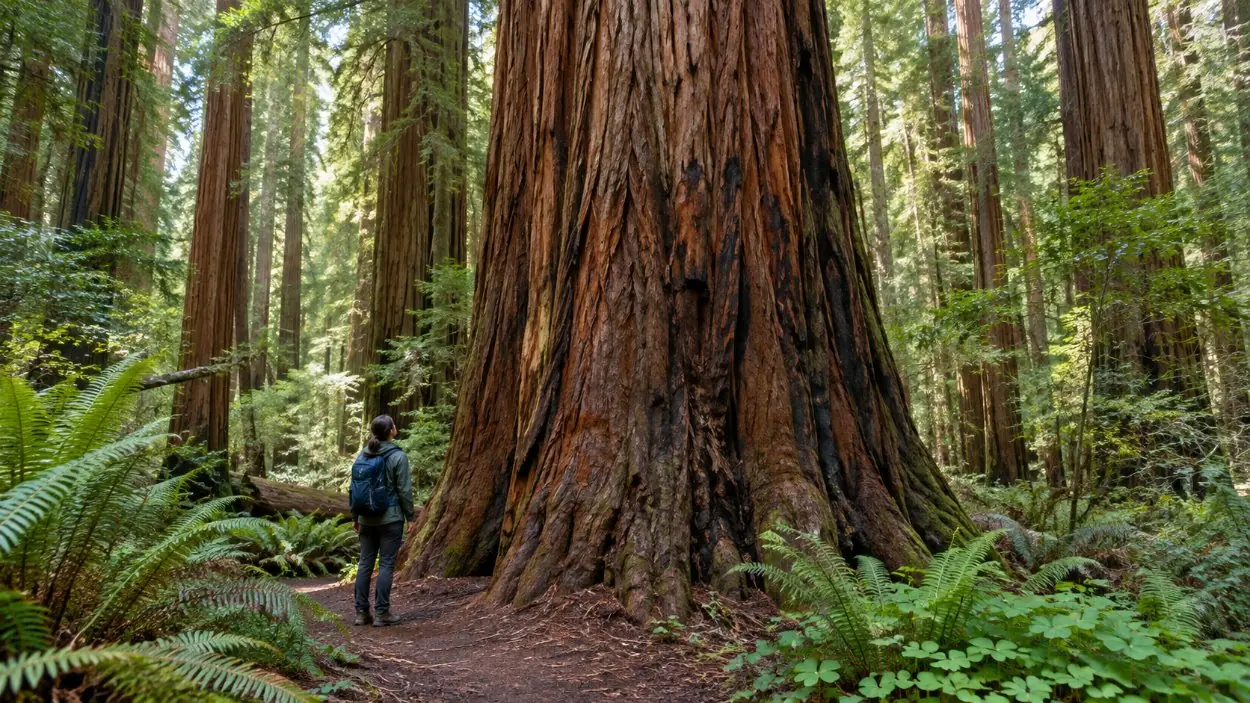
The main point is location. Old-growth coast redwoods, the tallest tree species in the world, stand in a canyon at the foot of Mount Tamalpais, a short drive from a large city. It is one of the last old-growth stands in the Bay Area; this canyon was bought to save it from logging and given to the federal government. On 9 January 1908 President Theodore Roosevelt proclaimed it a national monument, the first created from privately donated land. The history page tells the story in order.
What is there to see
The trees. Coast redwoods more than 1,100 years old, growing in circles around old trunks, the rings known as family circles or fairy rings.
Cathedral Grove. A grove on the Main Trail, signposted as a quiet zone. On 19 May 1945 more than 500 delegates of 46 nations at the United Nations Conference on International Organization held a memorial service here for President Franklin D. Roosevelt, and a plaque records it.
Redwood Creek. The creek that shaped the canyon holds one of the few wild coho salmon runs near a city in the United States; the fish spawn roughly December to February.
The animals. More than 50 bird species, 11 bat species, northern spotted owls, black-tailed deer and banana slugs. The wildlife page lists them.
Who it suits
The Main Trail is flat, paved and boardwalk, and the Bridge 2 and Bridge 3 loops are wheelchair and stroller accessible, so the old growth is within reach of people who do not hike. Emma, on the half-day trip, called the woods “magical” and found them good for families. For hikers, trails climb from the valley into Mount Tamalpais State Park, from a 3-hour loop to a full day to Stinson Beach. Six guided tours from San Francisco include the forest, most of them with Sausalito.
What it is not
- Not the tallest redwoods. The tallest tree in Muir Woods is about 258 feet. The tallest known redwoods grow about 300 miles north in Redwood National and State Parks.
- Not giant sequoias. The trees are coast redwoods, Sequoia sempervirens. Giant sequoias, Sequoiadendron giganteum, grow in the Sierra Nevada, for example in Yosemite’s Mariposa Grove. The coast redwoods page sets out the differences.
- Not a walk-in stop by car. Every private car needs a parking reservation made in advance, and there is no cell signal on arrival.
- Not a long hike on a tour. Tours give 60 to 90 minutes on the ground, which fits the valley floor, not the climbing trails.
The practical side
An entrance fee applies to visitors 16 and older, and the parking or shuttle reservation is a separate charge; the tours include the fee in five cases out of six. The things to know page covers the rules, and the alternatives page lists other redwood forests in the region for anyone weighing a different day out.
Cathedral Grove is on the Bridge 3 loop, 1 mile and about an hour in all, so it is inside the time every tour allows in the forest.
Frequently asked questions
Why is Muir Woods so special?
It is old-growth coast redwood forest about 12 miles from San Francisco, protected since 1908. The history page explains how it was saved.
Why is Muir Woods so famous?
Its age, its closeness to the city, the 1908 proclamation and the 1945 United Nations memorial in Cathedral Grove.
Does Muir Woods have the tallest redwoods?
No. Its tallest tree is about 258 feet; the tallest known redwoods grow about 300 miles north. The coast redwoods page explains.
Is Muir Woods suitable for people who do not hike?
The paved and boardwalk Main Trail is flat, and its Bridge 2 and Bridge 3 loops are wheelchair and stroller accessible.